> For the complete documentation index, see [llms.txt](https://tutorials.kuasa.io/getting-started/llms.txt). Markdown versions of documentation pages are available by appending `.md` to page URLs; this page is available as [Markdown](https://tutorials.kuasa.io/getting-started/kuasa-crm-pipeline/projects/steps-to-setup-webhook/connector-using-pabbly.md).

# Connector using Pabbly

<mark style="color:blue;">**Register Pabbly Account**</mark>

1. Open [**pabbly.com**](https://www.pabbly.com/) in a new tab.
2. Click **Sign Up Fre**.

<figure><img src="/files/k1zoBaOS7K3pWm0b5Bil" alt=""><figcaption></figcaption></figure>

3. Click **Sign up with Google**.

<figure><img src="/files/lAHZBSmyJendQIwMDwEM" alt=""><figcaption></figcaption></figure>

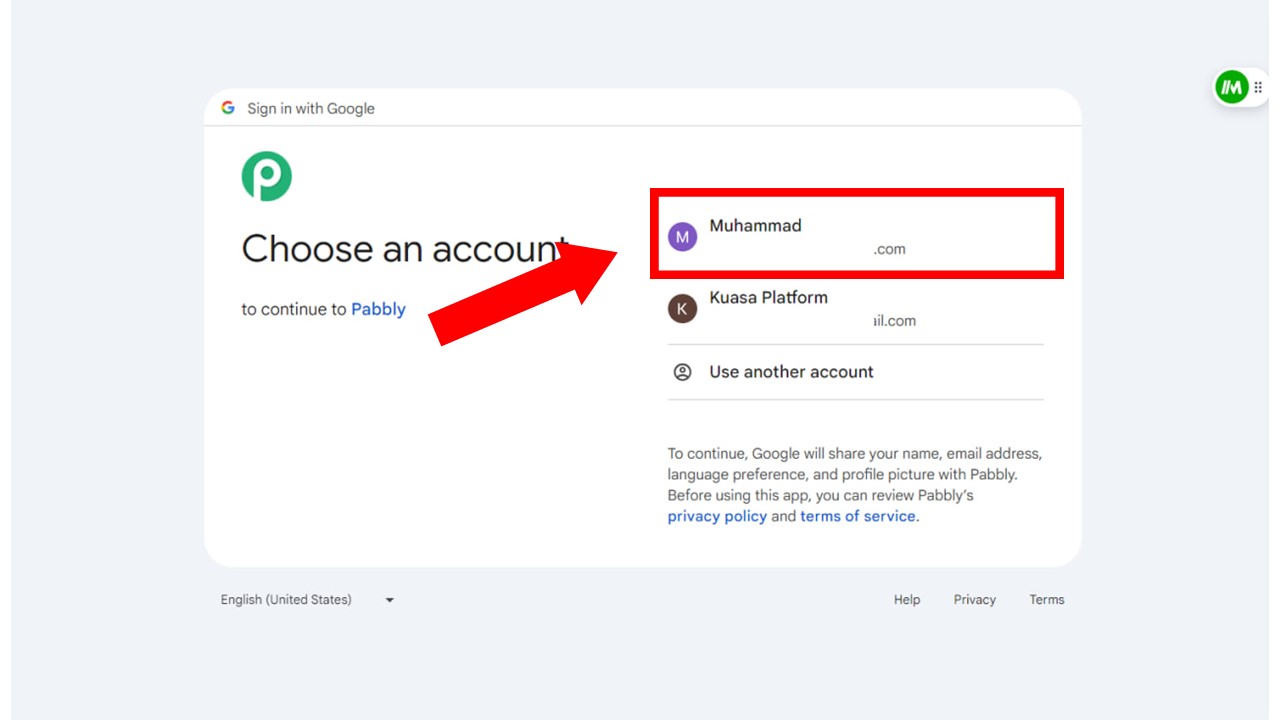
4. Choose your preferred email.

<figure><img src="/files/KBVArwzpnEjhyW6hJ6o8" alt=""><figcaption></figcaption></figure>

5. Click the **Continue** button.

<figure><img src="/files/bVC45zkmT8v8yYjxyowB" alt=""><figcaption></figcaption></figure>

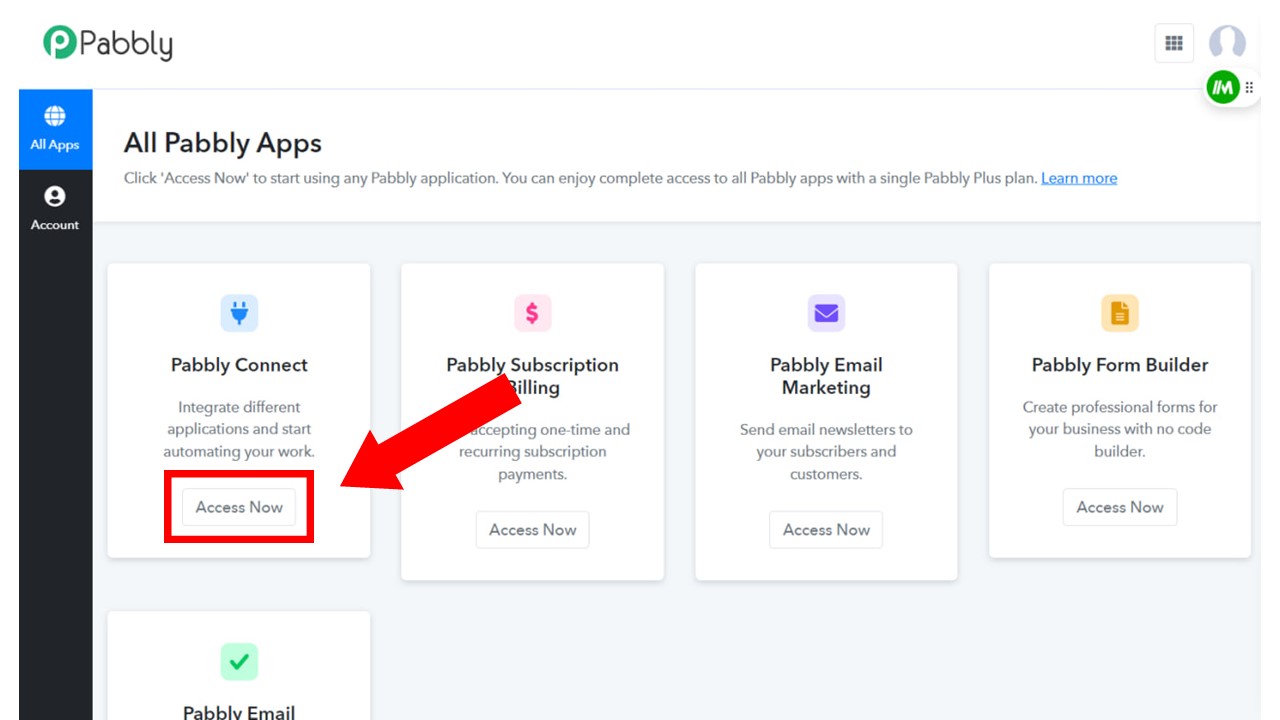
6. Click **Access Now** under Pabbly Connect to open the page in a new tab.

<figure><img src="/files/5x5ShPVhjIoqeEL0mc6H" alt=""><figcaption></figcaption></figure>

<mark style="color:blue;">**Setup First Action: Webhook**</mark>

7. Click **+ Create Workflow**.

<figure><img src="/files/9ew7W27TIc1EGbTWnW6j" alt=""><figcaption></figcaption></figure>

8. Enter a name for the workflow and then click the **Create** button.

<figure><img src="/files/wMAxAsL3MlYHM4mnzQD8" alt=""><figcaption></figcaption></figure>

9. Under Choose App, select **Webhook**.

<figure><img src="/files/pqszQcWAD9fh0TFxhQ3K" alt=""><figcaption></figcaption></figure>

10. Under Trigger Event, choose **Catch Webhook (Preferred)**.

<figure><img src="/files/NJeIFwvkLVrdIi92Wbfl" alt=""><figcaption></figcaption></figure>

11. Copy the webhook URL.

<figure><img src="/files/e97b3KGU4QAAwrdBr5JD" alt=""><figcaption></figcaption></figure>

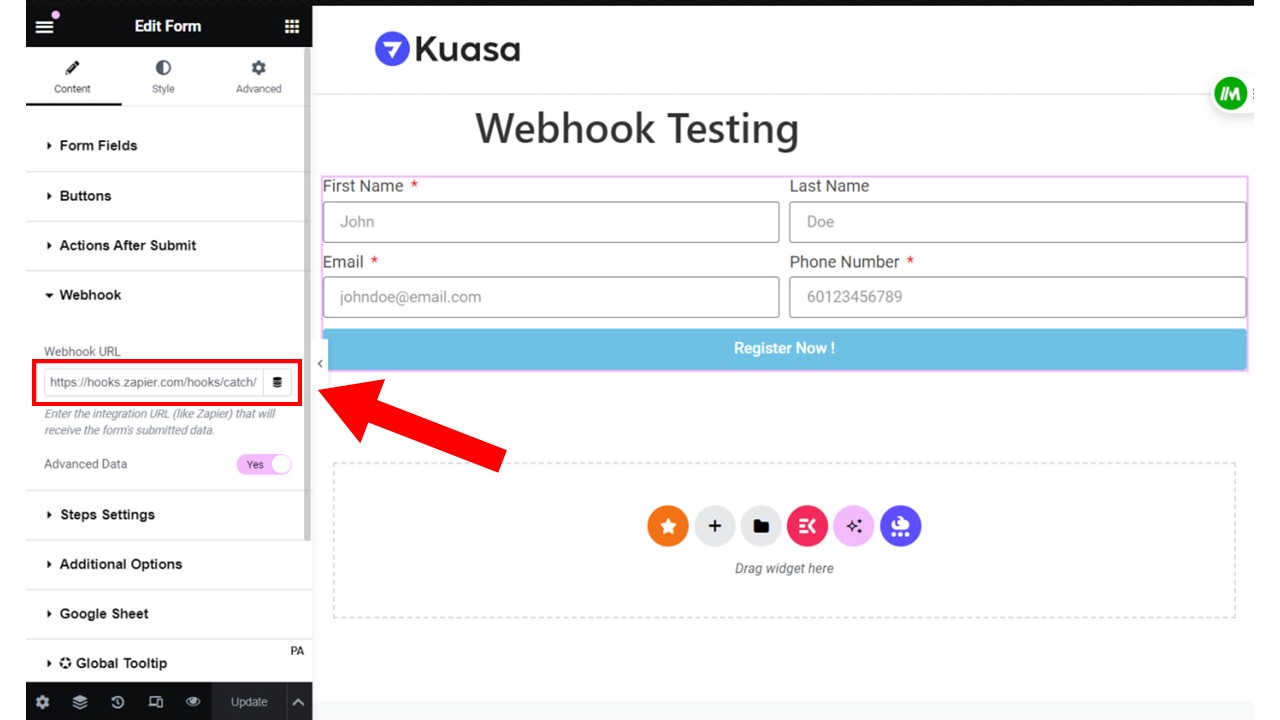
12. Paste the webhook URL into the form settings under Webhook.

<figure><img src="/files/0PI9eWDdPa6bA7helseo" alt=""><figcaption></figcaption></figure>

13. Open the form, fill it out, and submit it to trigger the hook.

<figure><img src="/files/yspw6M0OlLz7J9LgxX4D" alt=""><figcaption></figcaption></figure>

14. When you open Pabbly, it will show this: Pabbly already captures the details submitted in the form.

<figure><img src="/files/0lcXCGhveln4vleMRruj" alt=""><figcaption></figcaption></figure>

<mark style="color:blue;">**Setup Second Action: POST**</mark>

15. Click the second action.

<figure><img src="/files/l9hjQVh0zebTjKmJZwKp" alt=""><figcaption></figcaption></figure>

16. Under Choose App, select **API (Pabbly)**.

<figure><img src="/files/pcXBadt0QZQi33xmXfjl" alt=""><figcaption></figcaption></figure>

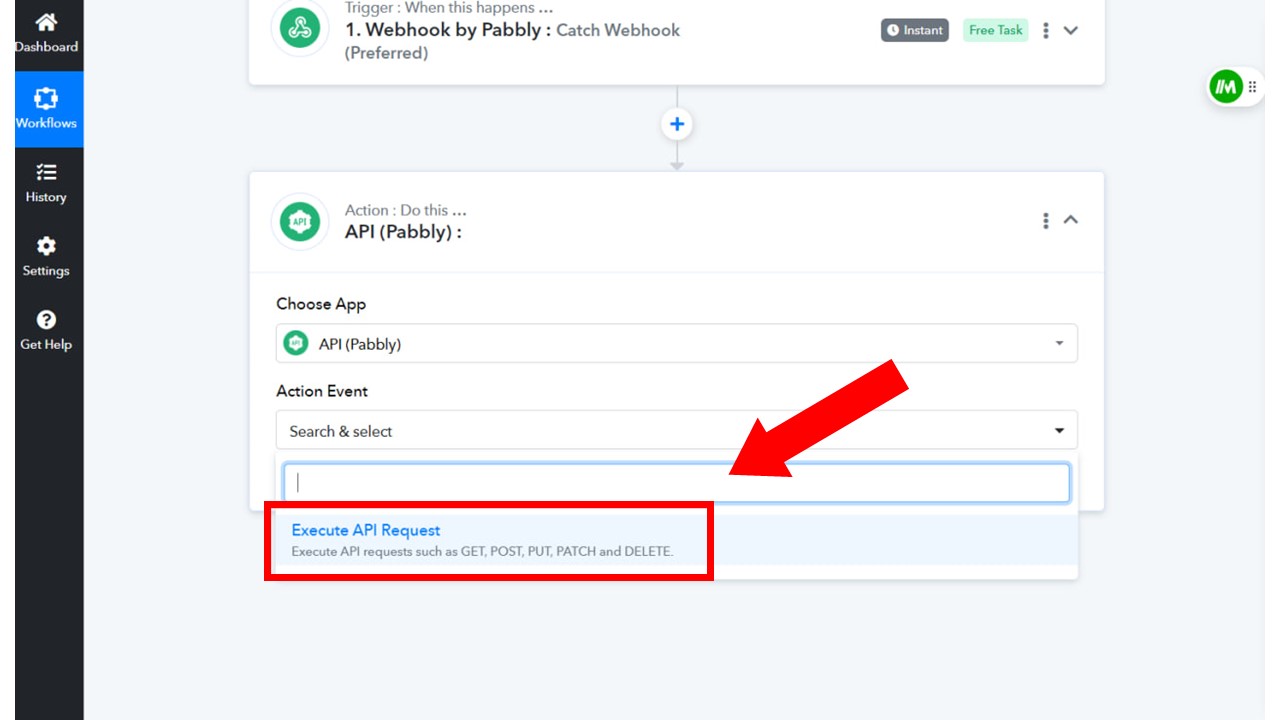
17. Under Action Event, choose **Execute API Request**. Then, click the **Connect** button.

<figure><img src="/files/tKxvWR7og01nv7PdCvqE" alt=""><figcaption></figcaption></figure>

<figure><img src="/files/jhcOcx1IcgG8BjuvJCOU" alt=""><figcaption></figcaption></figure>

18. Under Action Event Method, select **POST**.

<figure><img src="/files/b8fsWZk3TXUz68ULBzMG" alt=""><figcaption></figcaption></figure>

19. Under API Endpoint URL, paste the URL from Kuasa. Then, make sure under Payload Type, select **JSON**.

<figure><img src="/files/jQtDjEbOCgwJks7mGdB2" alt=""><figcaption></figcaption></figure>

20. &#x20;Tick at the **Set Parameter**.
21. Under Label, type **firstName**.

<figure><img src="/files/OQK16NvvygGoKS41gNjZ" alt=""><figcaption></figcaption></figure>

22. &#x20;Click the **Value** field and type **firstname** in <mark style="color:blue;">Insert Data from Previous Step</mark>.
23. &#x20;Choose **Fields FirstName Value**.
24. &#x20;Click '**+**' (on the right side) to add other label.

<figure><img src="/files/0JuraWsJ4F8rMwDlmyJY" alt=""><figcaption></figcaption></figure>

25. &#x20;Repeat steps 21 - 24 for the following details:

* Label **lastName** > Value search **lastname** > select <mark style="color:blue;">**Fields LastName Value**</mark>
* Label **email\_contact** > Value search **email** > select <mark style="color:blue;">**Fields Email Contact Value**</mark>
* Label **contact** > Value search **contact** > select <mark style="color:blue;">**Fields Contact Value**</mark>

26. &#x20;It should look like this.

<figure><img src="/files/qHd5069qZmN4QGpgirna" alt=""><figcaption></figcaption></figure>

27. &#x20;Click **Save & Send Test Request**.

<figure><img src="/files/9ZPpULs44xbSsEE7lqqu" alt=""><figcaption></figcaption></figure>

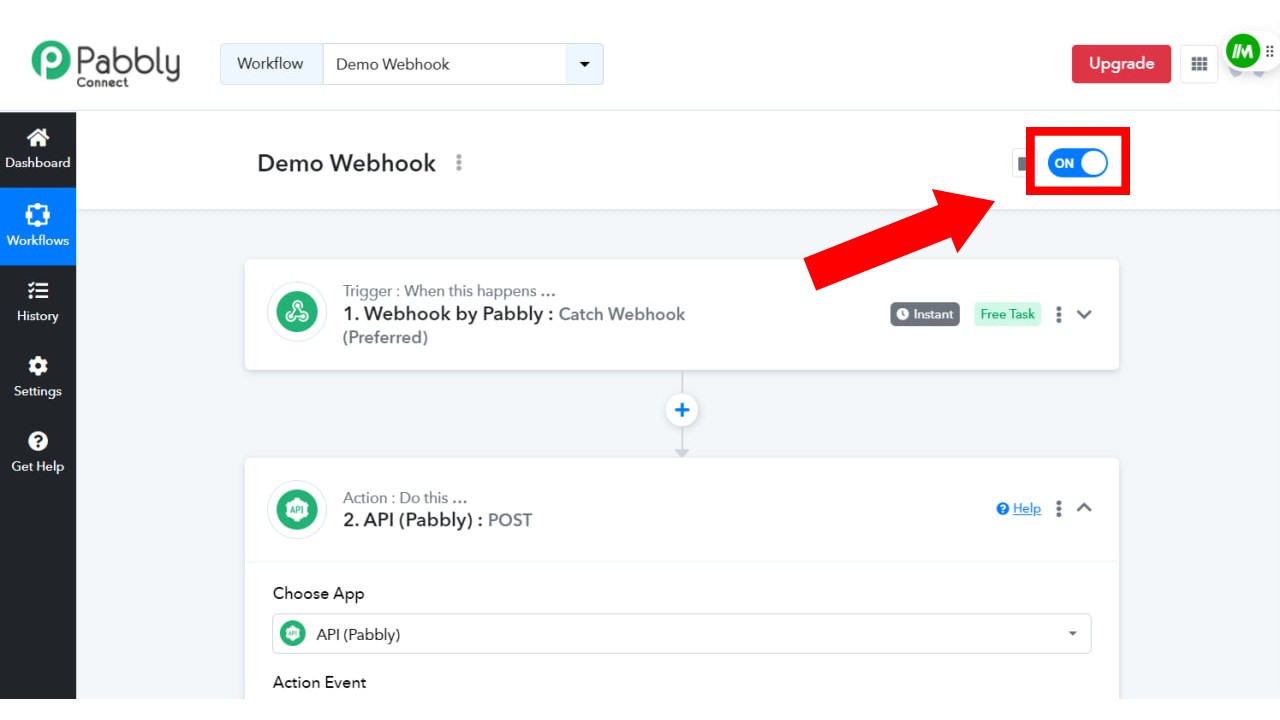
28. &#x20;If you want to turn off the webhook, you can toggle OFF the webhook at the top right of the page.

<figure><img src="/files/SkFslp53WPNgUqSqMXxJ" alt=""><figcaption></figcaption></figure>

**Well Done!** You already set up the webhook using Pabbly. You can try submitting the form again and check the details are entered into Kuasa system.


---

# Agent Instructions
This documentation is published with GitBook. GitBook is the documentation platform designed so that both humans and AI agents can read, navigate, and reason over technical content effectively. Learn more at gitbook.com.

## Querying This Documentation
If you need additional information that is not directly available in this page, you can query the documentation dynamically by asking a question.

Perform an HTTP GET request on the current page URL with the `ask` query parameter:

```
GET https://tutorials.kuasa.io/getting-started/kuasa-crm-pipeline/projects/steps-to-setup-webhook/connector-using-pabbly.md?ask=<question>
```

The question should be specific, self-contained, and written in natural language.
The response will contain a direct answer to the question and relevant excerpts and sources from the documentation.

Use this mechanism when the answer is not explicitly present in the current page, you need clarification or additional context, or you want to retrieve related documentation sections.